

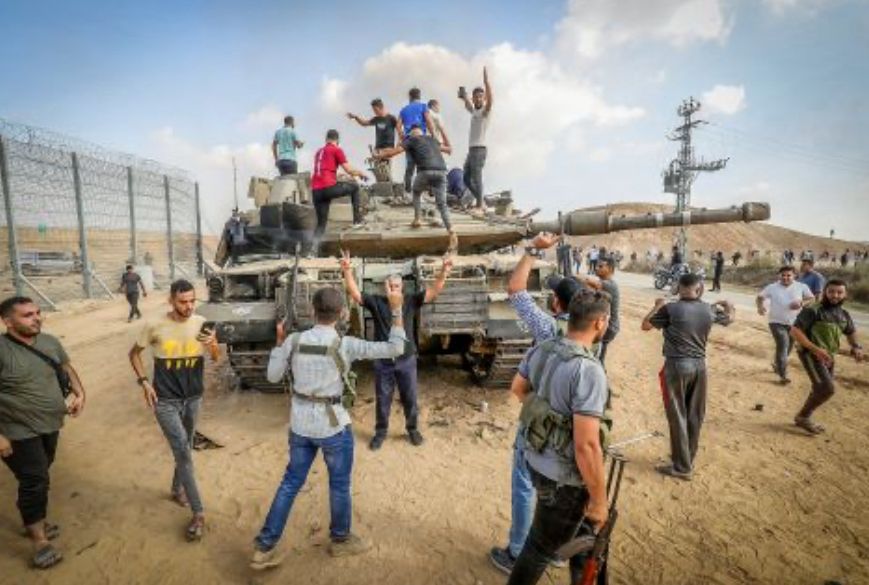
Itongadol.- This coming October 7 will mark two years since the Hamas massacre, when thousands of terrorists stormed communities in southern Israel, killing more than 1,200 people and abducting 251 others—including soldiers and civilians, women, children, and the elderly—in an act of unprecedented cruelty.
As rocket sirens sounded, dozens of communities along the Gaza border were invaded. Kibbutzim such as Nir Oz, Be’eri, Kfar Aza, and Nahal Oz experienced horror: homes and cars set on fire, looting, civilians murdered inside their houses, bodies left in the streets, and people taken hostage.

Perhaps the most remembered and most heartbreaking event was the attack on the Nova music festival, near Kibbutz Re’im, which had drawn thousands of young people gathered for music and peace. An estimated 364 attendees were killed there, and at least 44 were taken hostage. Many others were attacked while trying to escape along Route 232, where bodies were found, vehicles burned or abandoned, and dozens murdered inside bomb shelters.

The Hamas assault also included brutal sexual violence used as a weapon of war—at the Nova festival, on military bases, and in kibbutzim such as Re’im, Nir Oz, and Kfar Aza. Reports detailed gang rapes, genital mutilation, the use of objects on victims’ bodies, and, in many cases, victims murdered during or shortly after the abuse. According to testimonies from released hostages, the women subjected to these attacks included minors. Victims were sometimes stripped, bound, and subjected to explicit humiliation.

Israeli society, scarred by the tragedy, has not yet overcome the horror of that day. The Hostages and Missing Families Forum continues to demand the release of the 48 hostages still held in Gaza.
Meanwhile, Prime Minister Benjamin Netanyahu’s government, despite facing heavy criticism both domestically and internationally over its handling of the conflict, has emphasized that it will not rest until Hamas is defeated in Gaza.

The Israel Defense Forces (IDF) this week launched a major offensive on Gaza City, combining airstrikes with a ground operation. Over the past 48 hours, the Air Force and Artillery Corps have struck more than 150 targets in Gaza City, including military infrastructure, weapons depots, underground tunnels, and Hamas operational positions, which Israel considers part of the group’s logistical and command network.

For his part, Israel’s Defense Minister Israel Katz stated yesterday: “From Hamas we need only two things, and they will not give them willingly: to release all the hostages and to disarm. The intensity of this attack here not only militarily defeats Hamas, but also creates greater leverage for the release of the hostages.”

Over these nearly two years, some 900 Israeli soldiers have been killed in combat and more than 6,000 wounded. For the latest operation, the army called up over 50,000 reservists—young people leaving their studies or jobs, parents leaving their children without knowing when they will meet again—thousands of lives interrupted amid a devastating war with no end in sight.